
Brown County Arrest Records and Court Charges
Brown County arrest records are law-enforcement and jail-side records tied to an arrest, booking, custody status, arresting agency, charges or holds recorded at booking, bond information where public, and release status if displayed. The Brown County Sheriff's Department is the county law-enforcement agency for sheriff functions, patrol, civil process, jail operations, and local custody records. The Brown County Jail Division is the local detention source.
Court charge records begin when the Brown County Prosecuting Attorney files formal charges with the court. Indiana uses county prosecutors rather than a "district attorney" title. The prosecutor reviews law-enforcement reports, files criminal charges, represents the State of Indiana in criminal cases, handles plea agreements, appears at hearings, and may participate in probation-violation or child-support enforcement matters depending on local structure.
That distinction matters. A jail booking entry may show an arrest charge before the prosecutor files the court charge. The filed charge may be different, amended, reduced, dismissed, or resolved by plea or trial. For jail custody status, use the Brown County inmate records page; for the full criminal case after filing, use the Brown County criminal court records page.
Brown County Arrest Records Source
The Brown County Sheriff's Department page is the official county source for sheriff contact information and law-enforcement services: browncounty-in.gov/173/Sheriffs-Department.
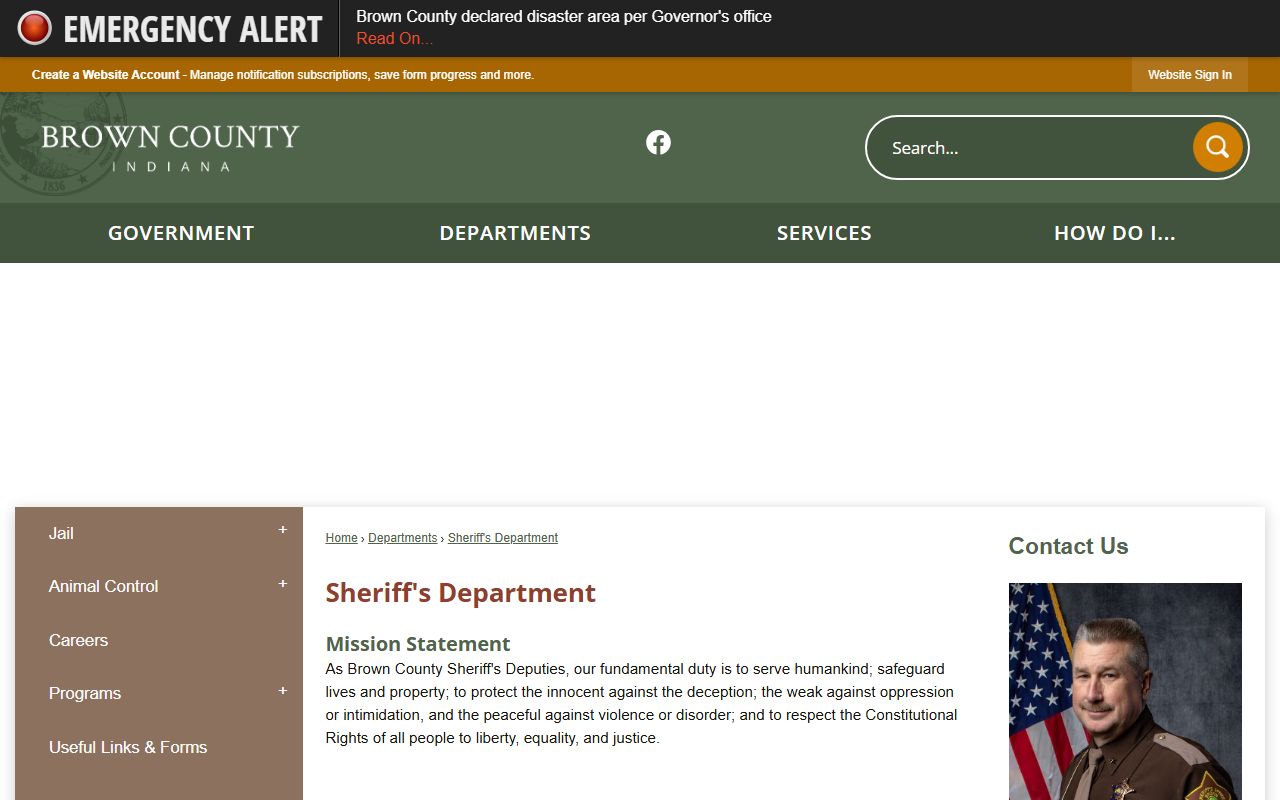
Use the sheriff and jail sources for arrest and custody records, then use MyCase and the Brown County Clerk for filed court charges and dispositions.
How to Find Brown County Arrest Records and Charges
The arrest side and court-charge side use different channels. For current or recent custody information, the research identifies the Brown County Jail Division and the Indiana public jail portal at public.indianajail.gov. For filed charges, case status, hearings, pleas, dispositions, and sentencing, the main search tool is Indiana MyCase.
- Check the Indiana public jail portal or Brown County Jail Division source for recent custody and booking information.
- Search MyCase by defendant name, case number, citation number, county, court, or criminal case type.
- Open the matching Brown Circuit Court case and read the charge list, count numbers, offense descriptions, statute references, and charge levels where visible.
- Check each charge's current status, including pending, dismissed, amended, disposition, plea, sentence, or financial entries.
- Contact the Brown County Clerk for certified copies or unavailable court documents, and the sheriff or jail for custody-record questions.
The Brown County Jail Division page is the local detention starting point. The Brown County Clerk page is the court-record copy source. No official Brown County Sheriff or Nashville Police mobile app with inmate lookup, warrant search, most-wanted list, or records-request tools was located in official sources.
How Charges Get Filed After an Arrest
After an arrest, the jail may record booking charges or holds. Those booking entries do not control the final court case. The charge record begins when the prosecutor files a charging document in Brown Circuit Court. Indiana criminal court records commonly use the term "information" for a charging document filed by a prosecutor. A court record may also refer to probable cause, initial hearing, bond, plea, disposition, and sentence.
| Document or Entry | What It Means in Brown County Records |
|---|---|
| Booking charge | Jail-side description recorded at arrest or booking; it may change after prosecutor review. |
| Information | Charging document filed by the prosecutor in the court case. |
| Probable cause | Legal basis supporting arrest, charge, or warrant action. |
| Initial hearing | Early criminal hearing where rights, charges, and bond are addressed. |
| Arraignment | Formal stage where a plea may be entered. |
Charge Status and What It Means
Charge status can change throughout the case. One arrest can produce several counts, and each count can have its own statute citation, offense description, felony or misdemeanor level, filing date, disposition, plea, and sentence. The court file is the authoritative source for filed charges and dispositions, not the original booking description.
| Status | What It Means |
|---|---|
| Pending | The charge remains active and has not reached final disposition. |
| Amended / Reduced | The filed charge changed, often after prosecutor review, motion practice, or plea negotiations. |
| Dismissed with prejudice | The charge was dismissed and generally not refiled. |
| Dismissed without prejudice | The charge was dismissed but may potentially be refiled. |
| Disposed | The court has entered the final outcome for that charge or case. |
| Sentenced | The court entered punishment after conviction, which may include probation, restitution, fines, costs, or custody conditions. |
Charges vs. Convictions
A charge is an accusation filed or pursued in court. A conviction is a final outcome after a guilty plea, verdict, or other conviction entry. Brown County records may show charges that were dropped, dismissed, amended, reduced, or resolved differently by count. Public searchers should avoid treating every arrest charge or filed count as a conviction.
| Charge | Conviction | |
|---|---|---|
| Stage | Accusation after arrest or prosecutor filing. | Outcome after guilty plea, verdict, or conviction entry. |
| Record Source | May appear in jail booking records and court charge lists. | Appears in the court record through disposition and sentencing entries. |
| Meaning | Shows what was alleged, not what was proven or admitted. | Shows the offense tied to judgment and sentencing. |
Sealed vs. Expunged Records
Indiana expungement law can restrict public access to eligible arrests, charges, or convictions after statutory waiting periods and filings. A Brown County resident generally starts with Indiana expungement self-service material and the case record in MyCase or clerk files, identifies the record category, files in the required court, serves required parties, and waits for judicial review.
| Sealed | Expunged | |
|---|---|---|
| Visibility | Public access restricted by court order, rule, or statute. | Public access restricted under Ind. Code ch. 35-38-9 and the court's order. |
| Applies To | Can involve sealed filings, juvenile matters, confidential information, or case-specific orders. | Can involve eligible arrests, dismissed charges, misdemeanors, lower-level felonies, or other statutory categories. |
| Government Access | Authorized court, law-enforcement, or agency access may remain. | Some licensing, law-enforcement, sentencing, or criminal-justice access may remain. |
Charge Codes and Severity Levels
Charge information in a Brown County criminal case may show the statute citation, offense description, felony or misdemeanor level, filing date, disposition, plea, and sentence. Indiana MyCase entries should be read count by count because a single arrest can lead to multiple filed charges, and each charge may resolve differently.
Traffic crimes and infractions may also appear in court systems, but a court traffic record is separate from the Indiana BMV driver record. The court record shows case events and disposition. The BMV driver record shows license status, points, and conviction history maintained by the motor vehicle agency.
Bond, Warrants, and Missed Court Dates
A Brown County arrest may connect to a warrant, bond order, or missed court date. MyCase may show public entries such as bench warrant, failure to appear, warrant recalled, bond, or hearing entries in a criminal or traffic case. The sheriff executes warrants and keeps law-enforcement warrant information, while the court issues or recalls warrants in the case record.
Research did not locate an official Brown County online active-warrant search or public warrant list. The practical route is to search MyCase for public case entries, contact the sheriff or jail for custody and warrant procedure, and contact the clerk or court when the issue appears to involve a missed court date or unpaid court obligation. Sealed warrants, juvenile warrants, search warrants in active investigations, and victim-protection information may not be publicly confirmed.
Statewide and Federal Charge Lookups
Brown County court charges are searched locally through MyCase and the clerk. State prison custody after sentencing is separate and may move to Indiana Department of Correction offender information channels. Victim notification may involve VINELink where available. Federal custody and federal charges are separate from Brown Circuit Court records.
Federal cases are searched through federal systems such as PACER. The PACER federal case records system is available at pacer.uscourts.gov.
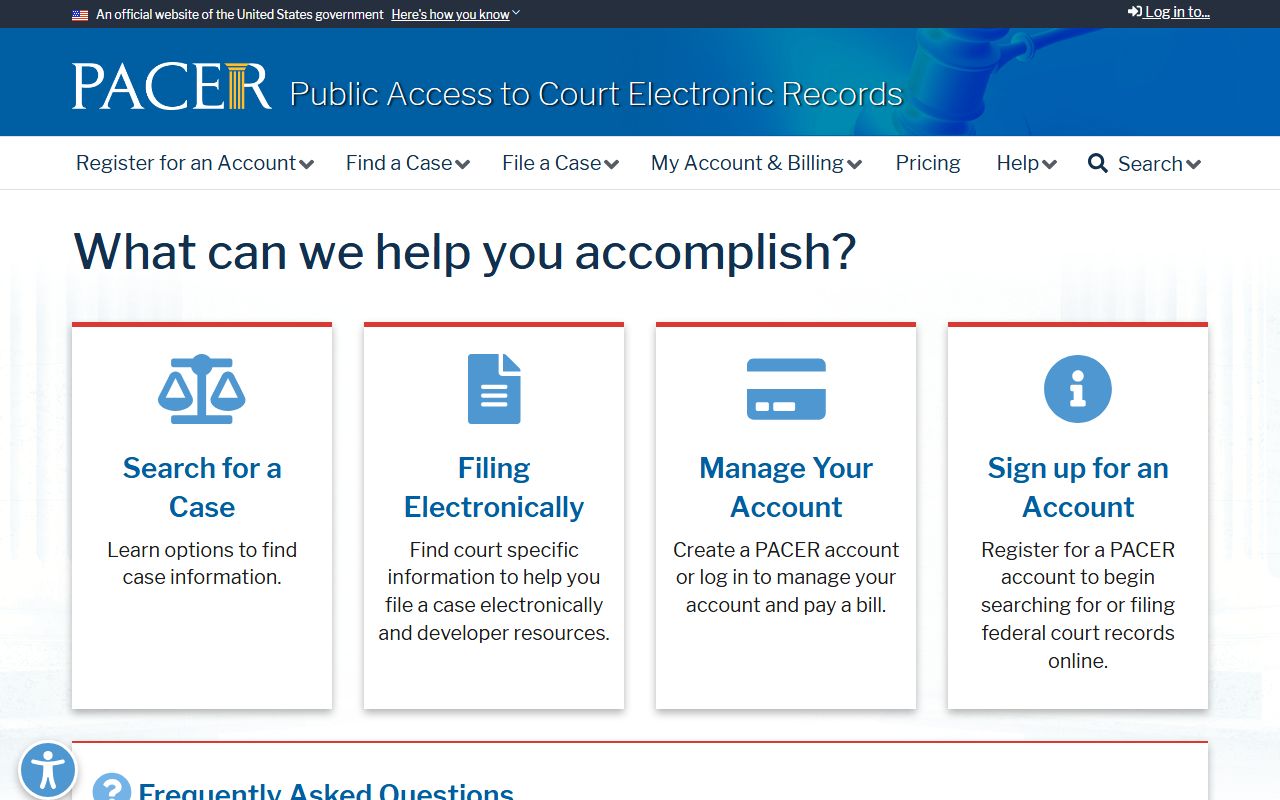
PACER is relevant only for federal court charges and case records. A Brown Circuit Court charge does not become a federal record unless a separate federal case exists.
Prosecutor Review and Appointed Counsel
The Brown County Prosecuting Attorney is the charging authority that converts law-enforcement reports into filed court charges. The prosecutor represents the State of Indiana in criminal cases, handles plea agreements, appears at hearings, and may participate in probation-violation matters. That role is why arrest charges and filed court charges can differ.
The public defender function in Indiana is not always a single county office with a public website. Brown County defendants who cannot afford counsel request appointed counsel through the court process. Research did not locate a standalone official Brown County public defender office page with address and direct phone, so the accurate channel is the criminal case through Brown Circuit Court rather than an invented office listing.
Background Check Considerations
Arrest records and charge records can be incomplete or easy to misread without verifying identity, case number, disposition, and expungement status. A booking entry may not match the filed charge. A filed charge may not end in conviction. A dismissed or expunged record may be restricted from public access. Public court lookups are not the same as regulated consumer background checks.
Important: Do not use arrest or charge data for FCRA-regulated decisions without a legally compliant consumer-reporting process.
Restricted Charge Records in Brown County
Juvenile charges, sealed filings, expunged records, mental-health information, adoption-related records, victim addresses, full birth dates, Social Security numbers, financial account numbers, and minor identifying information may be unavailable or redacted. Public MyCase results may omit or mask juvenile case details. Sheriff records tied to active investigations may also be withheld under applicable rules.
If a charge appears in one source but not another, the difference may reflect timing, prosecutor review, court filing, sealing, expungement, or access level. The safest workflow is to compare the jail or sheriff source for custody, MyCase for filed court charges, and the Brown County Clerk for certified copies or record-access questions.